

You’re not in danger.
Nothing bad is happening.
No emergency. No crisis.
And yet your body feels tight.
Your shoulders are raised.
Your jaw is clenched.
Your breathing feels shallow.
You can’t explain it.
So you assume:
“Maybe I’m just anxious for no reason.”
But tension without a clear threat is not random.
It’s accumulated stimulation.
Your Body Doesn’t Know the Difference Between “Busy” and “Threat”
Your nervous system evolved for short bursts of danger.
In modern life, stimulation never fully stops:
- Notifications
- Background noise
- Constant decisions
- Social comparison
- Mental multitasking
Even when nothing is “wrong,” your system stays alert.
This creates low-level muscle tension that feels unexplained.

The Hidden Cost of Staying “On”
Chronic low-level alertness leads to:
- Tight neck and shoulders
- Shallow breathing
- Jaw clenching
- Restlessness while sitting still
You may not feel panic.
But your body hasn’t fully switched off.
This is common in people navigating digital overload and constant mental input.
Why Relaxation Techniques Sometimes Don’t Work
When someone says:
“Just relax.”
It rarely helps.
Because tension isn’t created by a single thought.
It’s created by cumulative stimulation.
Until the input reduces, the system resists full relaxation.
This is why understanding anxiety in the digital age matters more than forcing calm.
The Difference Between Anxiety and Overload
Not all tension is emotional fear.
Sometimes it’s:
- Cognitive fatigue
- Decision overload
- Lack of mental closure
- Constant input without pause
Your body holds what your mind hasn’t processed.
That’s why tension often appears in the evening.
A Simple Body Reset
Instead of trying to think your way out of tension:
- Lower your shoulders intentionally.
- Exhale longer than you inhale.
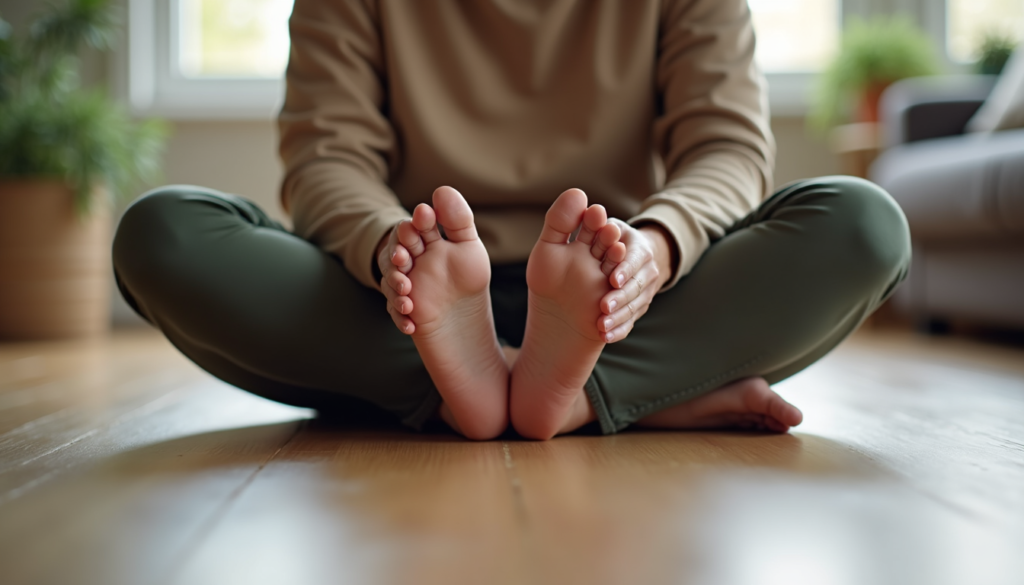
- Place your feet flat on the floor.
- Stay there for 60 seconds.
You’re not fixing anxiety.
You’re signaling safety.
Small signals repeated daily teach the nervous system that rest is allowed.
Why Tension Feels Worse at Night
During the day, movement masks it.
At night, stillness reveals it.
Without distraction, your system checks:
“Are we safe now?”
If your day had no true reset, your body stays alert.
This links closely with sleep disruption and mental overactivity before bed.
Final Thoughts
You’re not tense because you’re weak.
You’re tense because your system has been working nonstop.
Reduce input.
Create pauses.
Signal safety through the body.
Calm is not forced.
It’s allowed.