


You’re not thinking about anything stressful.
Nothing urgent is happening.
There’s no immediate problem to solve.
And yet, your body feels tight.
Your shoulders feel stiff.
Your breathing feels slightly restricted.
There’s a subtle tension that you can’t quite explain.
It can be confusing.
If your mind feels calm, why does your body still feel tense?
This experience is more common than most people realize, and it has a clear explanation rooted in how your brain and body respond to stress.
The Body Remembers Stress Even When the Mind Moves On
Your mind and body don’t always operate at the same pace.
You might mentally move past a stressful situation, but your body can take longer to reset.
When you experience stress, your nervous system activates a response designed to protect you.
This response prepares your body for action by:
• tightening muscles
• increasing alertness
• adjusting breathing patterns
Even after the situation passes, the body may remain in this slightly activated state.
This is why you can feel physical tension even when your thoughts seem calm.
You’re not thinking about anything stressful.
Nothing urgent is happening.
There’s no immediate problem to solve.
And yet, your body feels tight.
Your shoulders feel stiff.
Your breathing feels slightly restricted.
There’s a subtle tension that you can’t quite explain.
It can be confusing.
If your mind feels calm, why does your body still feel tense?
This experience is more common than most people realize, and it has a clear explanation rooted in how your brain and body respond to stress.
The Body Remembers Stress Even When the Mind Moves On
Your mind and body don’t always operate at the same pace.
You might mentally move past a stressful situation, but your body can take longer to reset.
When you experience stress, your nervous system activates a response designed to protect you.
This response prepares your body for action by:
• tightening muscles
• increasing alertness
• adjusting breathing patterns
Even after the situation passes, the body may remain in this slightly activated state.
This is why you can feel physical tension even when your thoughts seem calm.

Why Your Nervous System Stays Activated
Your body is controlled by the nervous system, which regulates how you respond to stress.
Sometimes, the nervous system doesn’t immediately return to a fully relaxed state.
Instead, it remains slightly alert.
This can happen due to:
1. Accumulated Stress
Small stresses throughout the day can build up in the body.
Even if each situation seems minor, the combined effect can keep your body in a state of tension.
2. Mental Overactivity
Even when you don’t feel actively stressed, your mind may still be processing thoughts in the background.
For example, if your mind tends to stay active at night, you may relate to:
Why Your Mind Won’t Shut Off at Night
This ongoing mental activity can keep the body slightly tense.
3. Habitual Tension
Over time, the body can become used to holding tension.
Muscles may remain slightly tight even when there is no immediate reason for it.
This becomes a pattern that the body repeats automatically.
The Connection Between Thoughts and Physical Tension
Your body often reacts to thoughts that you may not even notice.
Subtle concerns, expectations, or internal pressure can trigger physical responses.
This is why stress doesn’t always feel obvious in the mind but can still appear in the body.
For example, you might not feel anxious, but your body shows signs like:
• tight shoulders
• shallow breathing
• chest pressure
If you’ve experienced chest tension during stress, you may also find this helpful:
Why Your Chest Feels Tight During Stress
The mind and body are closely connected, even when the signals are subtle
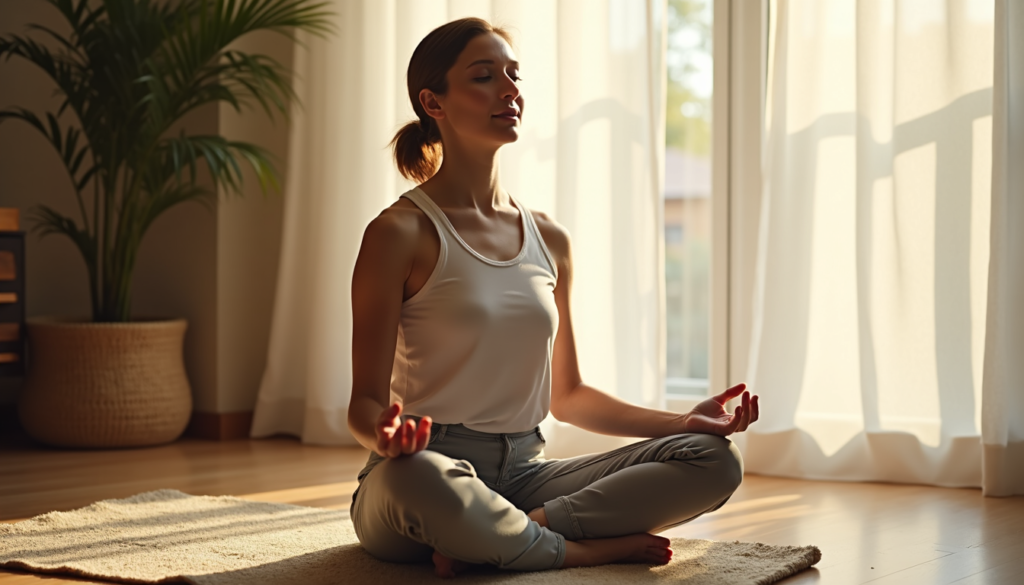
How to Release Tension From the Body
The key to reducing physical tension is helping your nervous system return to a relaxed state.
Here are a few simple ways to do that.
1. Bring Awareness to Your Body
Start by noticing where tension exists.
Common areas include:
• shoulders
• neck
• jaw
• chest
Simply becoming aware of tension can help your body begin to release it.
2. Slow Your Breathing
Breathing is one of the fastest ways to calm the nervous system.
Try this:
• inhale slowly for 4 seconds
• exhale slowly for 6 seconds
• repeat for a few minutes
This signals to your body that it is safe to relax.
3. Gently Release Muscle Tension
You can also physically release tension by:
• stretching
• rolling your shoulders
• relaxing your jaw
These small movements help reset the body.
4. Reduce Mental Load Before Rest
If your mind tends to stay active, give it closure before relaxing.
Writing down thoughts or tasks can prevent your brain from continuing to process them in the background.
Final Thoughts
If your body feels tense even when your mind seems calm, it doesn’t mean something is wrong.
It simply means your body is still processing stress at a physical level.
Learning to recognize this pattern can help you respond more effectively.
With small habits that calm your nervous system and release tension, your body can gradually return to a more relaxed and balanced state.
Over time, both your mind and body can begin to feel calm together.