



Introduction
Anxiety can feel especially difficult to manage in a world filled with constant notifications, information, and digital distractions.
Have you ever felt mentally exhausted before your day has even properly begun?
You wake up and instinctively reach for your phone. Overnight emails, breaking news alerts, social media notifications, text messages, calendar reminders, and endless updates are awaiting your attention before you’ve even stepped out of bed.
By the time your morning coffee is finished, your brain has already processed more information than previous generations might have encountered in an entire day.
It’s no surprise that so many people describe feeling constantly anxious, mentally drained, and emotionally overwhelmed.
Anxiety has become one of the defining challenges of modern life. While occasional stress is a normal part of being human, today’s digital world has created an environment where our minds rarely have the opportunity to rest. We’re expected to stay connected, respond quickly, make countless decisions, and absorb a never-ending stream of information.
The result is a brain that’s always alert–even when there’s no immediate danger.
If you’ve noticed that your thoughts race the moment you wake up, your phone feels impossible to ignore, or you struggle to switch off at the end of the day, you’re not alone. These experiences are increasingly common in a world designed to capture and hold your attention.
The encouraging news is that anxiety doesn’t have to control your life.
By understanding how modern technology affects your mind and learning practical strategies to manage stress, you can regain a sense of calm without disconnecting from the world around you.
In this comprehensive guide, you’ll discover:
- Why anxiety feels more common than ever before.
- How digital technology quietly fuels chronic overwhelm.
- The science behind the anxiety cycle.
- Practical techniques to calm your nervous system.
- Daily habits that help you build a calmer, more resilient mind.
Whether you’re feeling overwhelmed by work, struggling with racing thoughts, or simply looking for more peace in your daily life, this guide will help you take the first step toward lasting calm.
Table of Contents
- Why Modern Life Creates Constant Anxiety
- Signs Your Anxiety Is Being Fueled by Technology
- Understanding the Anxiety Cycle
- What Anxiety Does to Your Brain and Body
- 10 Practical Ways to Calm an Overwhelmed Mind
- Creating a Low-Anxiety Lifestyle
- When Should You Seek Professional Help?
- Frequently Asked Questions
- Conclusion

Why Modern Life Creates Constant Anxiety
Human beings evolved to respond to short periods of stress.
Thousands of years ago, stress usually appeared in the form of immediate physical threats—a dangerous animal, harsh weather, or a lack of food. Once the danger had passed, the body returned to a relaxed state.
Today’s threats are very different.
Instead of escaping predators, we’re navigating overflowing inboxes, endless notifications, financial pressures, social comparison, demanding schedules, and the expectation of being available at all hours of the day.
The problem isn’t just the number of stressors.
It’s the fact that they rarely stop.
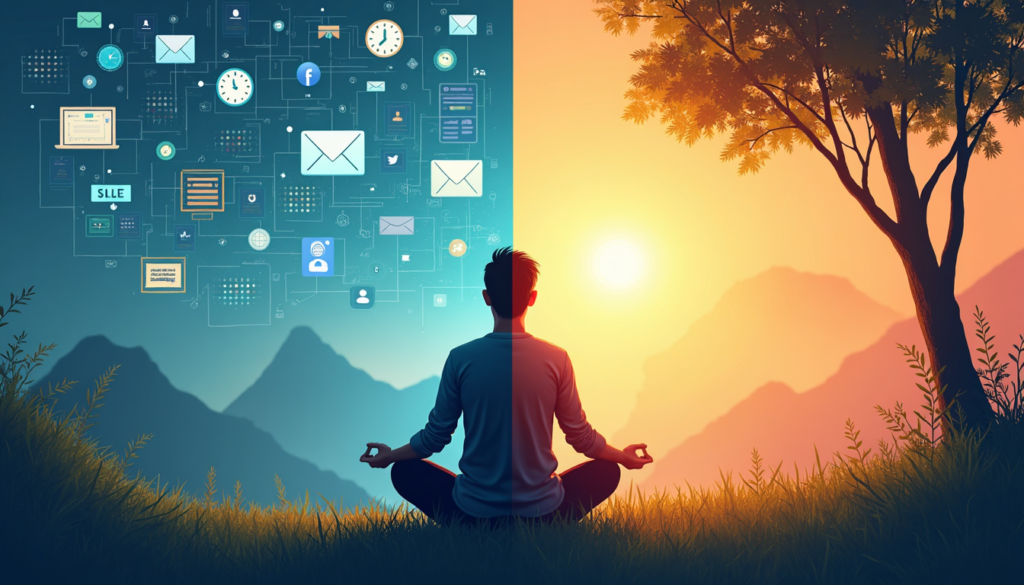
Every notification, unread message, or breaking news alert signals to your brain that something needs your attention. Even if the information isn’t urgent, your nervous system doesn’t always know the difference.
Over time, this constant stimulation keeps your brain in a state of low-level alertness. You may not feel panicked, but you rarely feel completely relaxed either.
Psychologists sometimes describe this as continuous partial attention–a state in which your focus is divided across multiple tasks, conversations, and digital interruptions. Instead of giving your full attention to one meaningful activity, your mind is constantly scanning for the next notification, update, or demand.
This fragmented attention doesn’t just reduce productivity–it also increases mental fatigue and emotional overwhelm.
If your thoughts often feel scattered or your mind seems cluttered with unfinished tasks and worries, you’re experiencing something that many people face in today’s digital world.
Why Your Mind Feels Cluttered All the Time
Another consequence of modern technology is our growing discomfort with stillness.
Waiting in line, sitting quietly, or even taking a short break often feels uncomfortable because we’ve trained ourselves to fill every empty moment with digital stimulation.
If this habit sounds familiar, you may also enjoy reading:
fill every empty moment with digital stimulation
Why You Need Constant Distraction to Feel Okay
Many people also describe feeling as though their brains are constantly switched on—even during moments that should feel relaxing.
Instead of enjoying dinner, reading a book, or spending time with loved ones, the mind continues planning, worrying, remembering, and anticipating.
“Over time, this constant stimulation keeps your brain in a state of low-level alertness. You may not feel panicked, but you rarely feel completely relaxed either.”
Brains are constantly switched on
Why You Feel Like You’re Always Mentally “On”
The reassuring truth is that your brain isn’t broken.
It’s adapting to an environment that constantly competes for your attention.
The good news is that, just as your brain learned these habits, it can also learn healthier ones.
Key Takeaways
- Modern technology has created an environment of constant mental stimulation.
- Continuous notifications and digital interruptions keep the brain in a prolonged state of alertness.
- Feeling overwhelmed doesn’t mean you’re weak–it often reflects the demands of modern life.
- Learning to manage your attention is one of the most effective ways to reduce anxiety and regain a sense of calm.
Signs Your Anxiety Is Being Fueled by Technology
Not all anxiety begins with a major life event.
Sometimes, it builds so gradually that you don’t notice it happening.
A few extra notifications.
A little more time scrolling before bed.
Checking work emails during dinner.
Watching “just one more” news update.
Individually, these habits may seem harmless. Together, they create an environment where your brain rarely gets the opportunity to slow down.
Modern technology has become an incredible tool, but it also keeps many of us in a state of constant mental stimulation. Instead of experiencing moments of stillness, our minds remain busy processing information, making decisions, and anticipating what might happen next.
Over time, this continuous stimulation can quietly amplify feelings of stress, worry, and anxiety.
If you’ve been feeling more overwhelmed than usual, technology may not be the only cause—but it could be adding fuel to the fire.
Let’s look at some of the most common warning signs

1. You Check Your Phone Without Realizing It
Have you ever unlocked your phone only to forget why you picked it up?
You’re not alone.
Many people reach for their phones dozens—or even hundreds—of times each day without making a conscious decision. It happens while waiting in line, watching television, eating meals, or even during conversations.
These repeated interruptions train your brain to expect constant stimulation. Every notification, message, or new piece of content offers a small burst of novelty, making it increasingly difficult to tolerate quiet moments.
The result is a habit loop where your attention is always searching for the next distraction.
Mindfulness begins by simply noticing this pattern without judging yourself.
Instead of asking, “Why can’t I stop checking my phone?” try asking, “What am I feeling just before I reach for it?”
That question often reveals that the phone isn’t the real problem. It’s simply the quickest escape from boredom, uncertainty, loneliness, or stress.
2. Your Thoughts Become Loudest at Night
Have you noticed that your anxiety seems to grow stronger once the day becomes quiet?
During busy hours, work, conversations, and responsibilities keep your attention occupied. But once the distractions disappear, your mind finally has space to process everything it has been carrying.
Suddenly, yesterday’s mistakes, tomorrow’s deadlines, unfinished tasks, and imagined worst-case scenarios all compete for your attention.
Many people describe lying in bed physically exhausted but mentally wide awake.
This doesn’t mean you’re doing something wrong.
It often means your brain hasn’t had enough opportunities throughout the day to slow down and process your experiences.
Creating intentional moments of stillness before bedtime can make a significant difference.

3. You Feel Mentally Exhausted Without Doing Much
Mental exhaustion is one of the clearest signs of cognitive overload.
Your brain is constantly making decisions:
- Should I reply to this email now?
- Did I miss an important message?
- Should I check social media?
- What should I do next?
- Am I forgetting something?
Each decision may seem small, but together they consume valuable mental energy.
Psychologists refer to this as decision fatigue–the gradual depletion of your ability to make thoughtful choices after making too many decisions throughout the day.
When your brain spends hours processing information, switching tasks, and responding to interruptions, it’s natural to feel mentally tired.
This isn’t laziness.
It’s cognitive overload.
4. You Feel Restless Even When Nothing Is Wrong
One of the most confusing aspects of anxiety is that it doesn’t always need a clear cause.
You might finally finish your work, sit down to relax, and still feel uneasy.
Instead of enjoying the moment, your mind begins searching for the next problem to solve.
This happens because anxiety trains your brain to stay alert–even when there’s no immediate danger.
Modern technology reinforces this pattern by constantly presenting new information, fresh problems, and endless opportunities for comparison.
Mindfulness helps interrupt this cycle by teaching your nervous system that not every quiet moment needs to be filled with activity.
Understanding the Anxiety Cycle
Anxiety rarely appears out of nowhere.
It usually follows a predictable pattern — a cycle that repeats itself until we become aware of it.
Imagine receiving an unexpected email from your manager.
Within seconds, your mind begins creating stories.
“Did I do something wrong?”
“Am I in trouble?”
“What if I lose my job?”
Even before you open the email, your body starts reacting.
Your heart beats faster.
Your breathing becomes shallow.
Your muscles tense.
You may avoid checking the email altogether because it feels overwhelming.
For a short moment, avoiding it brings relief.
But later, the uncertainty grows even stronger.
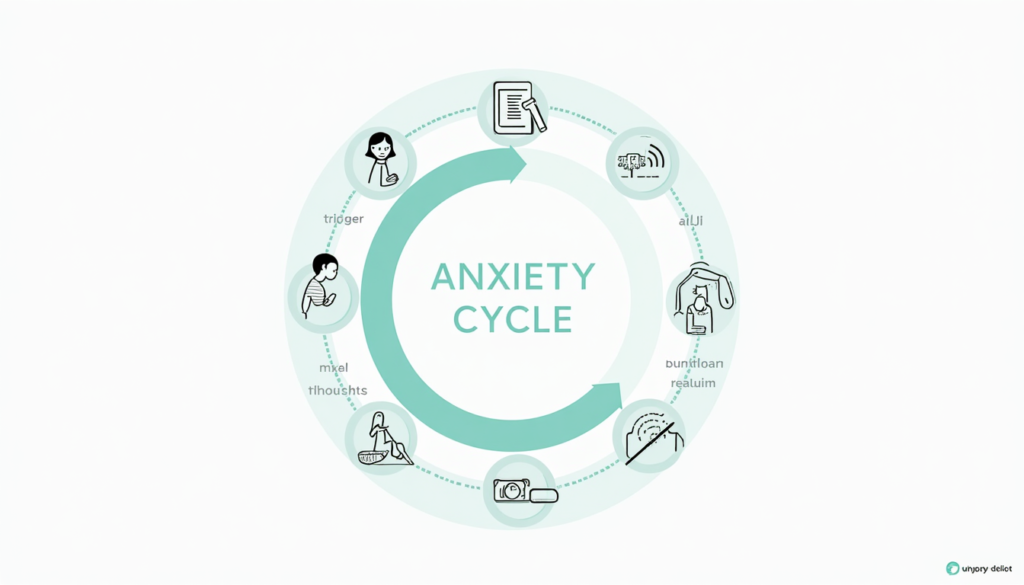
This is how the anxiety cycle reinforces itself.
The Anxiety Cycle
Trigger
↓
Automatic Thought
↓
Physical Symptoms
↓
Avoidance or Safety Behaviors
↓
Temporary Relief
↓
More Anxiety Next Time
The encouraging news is that this cycle can be interrupted.
Mindfulness, healthy coping strategies, and gradual exposure help you respond differently at each stage, reducing anxiety’s grip over time.
If you often imagine the worst possible outcome before anything has happened, you’re not alone.
Imagine the worst possible outcome before anything has happened
Similarly, if everyday decisions leave you feeling stuck or overwhelmed, overthinking can make even simple choices feel much harder.
Key Takeaways
- Technology doesn’t necessarily cause anxiety, but it can intensify existing stress by keeping your brain in a constant state of stimulation.
- Common signs include compulsive phone checking, racing thoughts at night, mental exhaustion, and persistent restlessness.
- Anxiety often follows a predictable cycle of trigger, thoughts, physical reactions, and avoidance.
- Recognizing these patterns is the first step toward changing them and regaining a sense of calm.
What Anxiety Does to Your Brain and Body
Anxiety isn’t “just in your head.”
When your brain perceives a threat–whether it’s a genuine emergency or simply an unanswered email—it activates your body’s built-in survival system.
Thousands of years ago, this response helped our ancestors escape predators and survive dangerous situations. Today, however, the same biological system often reacts to deadlines, financial worries, relationship problems, social media comparisons, or an overflowing inbox.
The challenge is that your body doesn’t always distinguish between a life-threatening situation and a stressful notification.
It simply prepares you to survive.
This reaction is known as the fight, flight, or freeze response.
For short periods, it’s incredibly helpful.
But when it’s activated day after day without enough time to recover, it can affect nearly every part of your physical and mental health.

Your Brain Stays on High Alert
The brain’s primary job is to keep you safe.
When it senses danger, it shifts attention away from long-term thinking and focuses on immediate survival.
This means:
- You become more alert to potential threats.
- Neutral situations may seem more dangerous than they actually are.
- Your mind begins scanning for “what could go wrong.”
This is why anxious thoughts often feel repetitive. Your brain isn’t trying to make your life difficult—it’s trying to protect you.
The problem is that when your brain stays in this protective mode for too long, it becomes exhausting.
You may find it harder to concentrate, remember information, or make simple decisions.
Stress Hormones Take Over
Whenever anxiety is triggered, your body releases hormones such as adrenaline and cortisol.
These hormones prepare you for action by:
- Increasing your heart rate.
- Raising blood pressure.
- Speeding up breathing.
- Tightening muscles.
- Releasing extra energy into your bloodstream.
In a genuine emergency, these changes are life-saving.
However, when stress hormones remain elevated for weeks or months, they can contribute to fatigue, irritability, poor sleep, headaches, and difficulty concentrating.
Think of your body like a car engine.
It’s designed to accelerate when needed–but it also needs time to idle and cool down.
If the engine runs at maximum speed all day, every day, wear and tear becomes inevitable.
Your Memory and Concentration Begin to Suffer
Have you ever walked into a room and forgotten why?
Or struggled to remember something you knew yesterday?
Chronic anxiety can make these experiences more common.
When your brain is constantly focused on detecting potential threats, it has fewer resources available for learning, memory, and creative thinking.
That’s why even highly capable people sometimes feel as though they’re becoming forgetful or unproductive during stressful periods.
You’re not becoming less intelligent.
Your brain is simply prioritizing survival over performance.
Why You Feel Mentally Drained Without Doing Much
Your Body Feels the Effects Too
Anxiety doesn’t stay confined to your thoughts.
It often shows up physically in ways you might not immediately connect to stress.
Common physical symptoms include:
- Muscle tension, especially in the neck and shoulders.
- Frequent headaches.
- Digestive discomfort or stomach pain.
- Fatigue, even after sleeping.
- Rapid heartbeat.
- Shortness of breath.
- Jaw clenching.
- Restlessness.
These symptoms can be alarming, which sometimes creates even more anxiety.
Why Your Body Feels Tense Even When You’re Calm
Understanding that your body is responding to stress — not necessarily danger — can be an important first step toward breaking that cycle.

10 Practical Ways to Calm an Overwhelmed Mind
While you can’t eliminate every source of stress, you can change how your mind and body respond to it.
Small, consistent habits often have a greater impact than dramatic changes that are difficult to maintain.
Here are ten practical strategies you can begin today.
1. Practice Box Breathing
When anxiety rises, your breathing often becomes fast and shallow.
Try this simple exercise:
- Inhale for four seconds.
- Hold for four seconds.
- Exhale for four seconds.
- Hold for four seconds.
Repeat for two to five minutes.
This technique helps activate your body’s relaxation response and can reduce feelings of panic.
2. Create a Daily Digital Detox
Choose one hour every day when all notifications are turned off.
Use this time to read, walk, cook, or simply enjoy a quiet moment without screens.
Giving your brain a break from constant stimulation can significantly reduce mental fatigue.

3. Move Your Body
Exercise doesn’t have to mean intense workouts.
A 20-minute walk, gentle stretching, yoga, or dancing in your living room can help lower stress hormones and improve your mood.
4. Challenge Catastrophic Thinking
When anxious thoughts appear, pause and ask yourself:
- What evidence supports this thought?
- What evidence doesn’t?
- What’s the most realistic outcome?
This simple exercise can reduce the power of worst-case thinking.
5. Limit Doomscrolling
Staying informed is important.
Constant exposure to alarming headlines isn’t.
Choose specific times to catch up on the news rather than checking updates throughout the day.
6. Practice Mindfulness Every Day
Mindfulness helps train your attention to return to the present moment instead of constantly worrying about the future.
Even five minutes of mindful breathing each day can gradually reduce anxiety.
7. Write Your Thoughts Down
Journaling helps move worries out of your mind and onto paper,
Often, thoughts that feel overwhelming become more manageable once writing things down.
8. Spend Time in Nature
Research suggests that spending time outdoors can help lower stress levels and improve overall well-being.
A short walk in a park or simply sitting beneath a tree can provide a valuable mental reset.
9. Prioritize Quality Sleep
Sleep and anxiety influence each other.
Poor sleep increases anxiety, and anxiety makes quality sleep more difficult.
Creating a calming bedtime routine can help break this cycle.
10. Practice Self-Compassion
Perhaps the most important habit of all is learning to speak to yourself with kindness.
Instead of saying:
“What’s wrong with me?”
Try asking:
“What do I need right now?”
That small shift often changes the entire conversation you have with yourself.
Key Takeaways
- Anxiety affects both the brain and the body through the fight, flight, or freeze response.
- Chronic stress can reduce concentration, increase fatigue, and contribute to physical symptoms.
- Small daily habits–such as mindful breathing, digital detoxes, journaling, movement, and quality sleep—can help calm your nervous system over time.
- Progress doesn’t require perfection. Consistent, manageable changes are more effective than trying to transform everything at once.
Creating a Low-Anxiety Lifestyle
Anxiety isn’t something you eliminate overnight.
There isn’t a single habit, breathing exercise, or productivity hack that permanently removes stress from your life. Instead, lasting calm is built through small, intentional choices that support your nervous system every day.
Think of anxiety like carrying a heavy backpack.
You may not be able to throw it away immediately, but you can stop adding unnecessary weight to it. Every healthy habit, every boundary you set, and every moment you choose rest over constant busyness helps lighten the load.
A low-anxiety lifestyle isn’t about avoiding responsibility or living without challenges. It’s about creating an environment where your mind has enough space to recover, adapt, and thrive.
Here are some of the most effective habits you can begin building today

Start Your Day Without Your Phone
How you spend the first few minutes after waking up often sets the emotional tone for the rest of the day.
If the first thing you see is a flood of emails, breaking news, or social media updates, your brain immediately shifts into reaction mode.
Instead, try giving yourself 20 to 30 minutes before checking your phone.
Use that time to stretch, enjoy breakfast, take a few deep breaths, write in a journal, or simply sit quietly with your thoughts.
Beginning the day with intention rather than interruption helps your nervous system ease into the day instead of being thrown into it.
Set Healthy Digital Boundaries
Technology should support your life–not control it.
Simple boundaries can make a remarkable difference:
- Turn off non-essential notifications.
- Avoid checking work emails after your workday ends.
- Keep your phone out of the bedroom.
- Schedule screen-free time each evening.
- Unfollow accounts that consistently leave you feeling anxious or inadequate.
Digital boundaries aren’t about rejecting technology–they’re about using it more intentionally.
Learn to Say No Without Feeling Guilty
One of the biggest contributors to chronic anxiety is trying to meet everyone’s expectations.
When you constantly say “yes” to avoid disappointing others, you’re often saying “no” to your own energy, time, and well-being.
Healthy boundaries aren’t selfish.
They’re an act of self-respect.
Every time you protect your time and emotional capacity, you’re teaching yourself that your needs matter too.
If setting boundaries feels uncomfortable, you may find these articles helpful:
Choose Relationships That Leave You Feeling Safe
Not every relationship affects your mental health in the same way.
Some people leave you feeling encouraged, understood, and energized.
Others leave you mentally exhausted, emotionally drained, or constantly second-guessing yourself.
Pay attention to how you feel after spending time with different people.
Healthy relationships don’t require you to prove your worth or walk on eggshells constantly.
Protecting your emotional well-being sometimes means spending less time with people who consistently increase your stress.
Prioritize the Foundations of Mental Well-Being
When life becomes overwhelming, it’s tempting to search for complicated solutions.
More often than not, the basics have the greatest impact.
Ask yourself:
- Have I slept enough this week?
- Have I moved my body today?
- Have I eaten nourishing meals?
- Have I spent any time outdoors?
- Have I allowed myself to rest without guilt?
These habits may seem ordinary, but together they create a strong foundation for emotional resilience.
You don’t have to be perfect.
You need to care for yourself consistently.

When Should You Seek Professional Help?
Everyone experiences anxiety from time to time.
Feeling nervous before an interview, worried about a loved one, or stressed during a busy week is a normal part of life.
However, if anxiety becomes persistent or begins interfering with your daily activities, it may be time to seek professional support.
Consider reaching out to a healthcare professional if:
- Anxiety feels overwhelming most days.
- You’re experiencing frequent panic attacks.
- Worry is affecting your sleep.
- You’re avoiding work, school, or social situations because of fear.
- Physical symptoms such as a racing heart or shortness of breath occur regularly without a medical explanation.
- Anxiety is affecting your relationships or quality of life.
Remember, asking for help isn’t a sign of weakness.
It’s a sign that you’re taking your mental health seriously.
Many people benefit from talking with a psychologist, counselor, or other qualified mental health professional. Depending on your situation, therapy, lifestyle changes, stress-management techniques, or medication may all play a role in recovery.
You don’t have to face anxiety alone.
Support is available, and recovery is possible.

Frequently Asked Questions
Can too much screen time increase anxiety?
Yes. Excessive screen time–especially when combined with constant notifications, social media comparison, and frequent news consumption–can increase stress and mental overload. Creating regular breaks from digital devices can help your mind recover.
Is digital anxiety a real condition?
“Digital anxiety” isn’t an official medical diagnosis, but it’s a commonly used term to describe stress and anxiety linked to constant digital stimulation, information overload, and technology use.
What’s the difference between stress and anxiety?
Stress is typically a response to an identifiable challenge, such as a deadline or exam, and often decreases once the situation has passed. Anxiety can persist even when there is no immediate threat and may involve ongoing worry, physical symptoms, or avoidance behaviors.
Can mindfulness help reduce anxiety?
Mindfulness won’t eliminate every anxious thought, but it can help you observe your thoughts without becoming overwhelmed by them. With regular practice, many people find that mindfulness improves emotional regulation and reduces stress.
Why do notifications make me feel overwhelmed?
Every notification competes for your attention. Frequent interruptions can increase cognitive load, making it harder to focus and giving your brain fewer opportunities to rest.
How long does it take to feel less anxious?
Everyone’s experience is different. Some people notice improvements within a few weeks of consistently practicing healthy habits, while others may benefit from additional support through therapy or counseling.
Can social media make anxiety worse?
For some people, yes. Constant comparison, exposure to distressing news, and pressure to stay connected can contribute to anxiety. Curating your feed and setting healthy limits can help.
How do I stop racing thoughts?
Techniques such as deep breathing, journaling, mindfulness, limiting evening screen time, and maintaining a consistent sleep routine can help quiet a busy mind over time.
Is anxiety permanent?
No. While anxiety may come and go throughout life, many people learn effective ways to manage it through lifestyle changes, therapy, mindfulness, and healthy coping strategies.
What’s the first step toward feeling calmer?
Start small. Choose one habit–such as taking a five-minute walk, turning off notifications for an hour, or practicing mindful breathing–and build from there. Small, consistent actions often lead to meaningful long-term change.
Conclusion
Living in a connected world doesn’t mean you have to live in a constant state of overwhelm.
While you can’t control every notification, deadline, or unexpected challenge, you can control how you care for your mind each day.
Real change rarely happens through dramatic overnight transformations. It happens through the quiet decisions you make consistently — pausing before reacting, setting healthy boundaries, getting enough rest, asking for support when you need it, and choosing presence over constant distraction.
Remember, anxiety is not a personal failure. It’s often your mind’s way of telling you that it needs care, recovery, and balance.
Start with one small change today. Turn off a few notifications. Take a short walk without your phone. Spend five minutes focusing on your breathing. These simple actions may seem small, but over time they can help create a calmer, more resilient life.
If you found this guide helpful, continue exploring our resources on mindfulness, overthinking, emotional boundaries, and mental well-being. Every step you take toward understanding your mind is a step toward living with greater peace and confidence.
These simple actions may seem small, but over time they can help create a calmer, more resilient life